
GST Intelligence is Now Powered by FASTag Analytics
Jun 12, 2026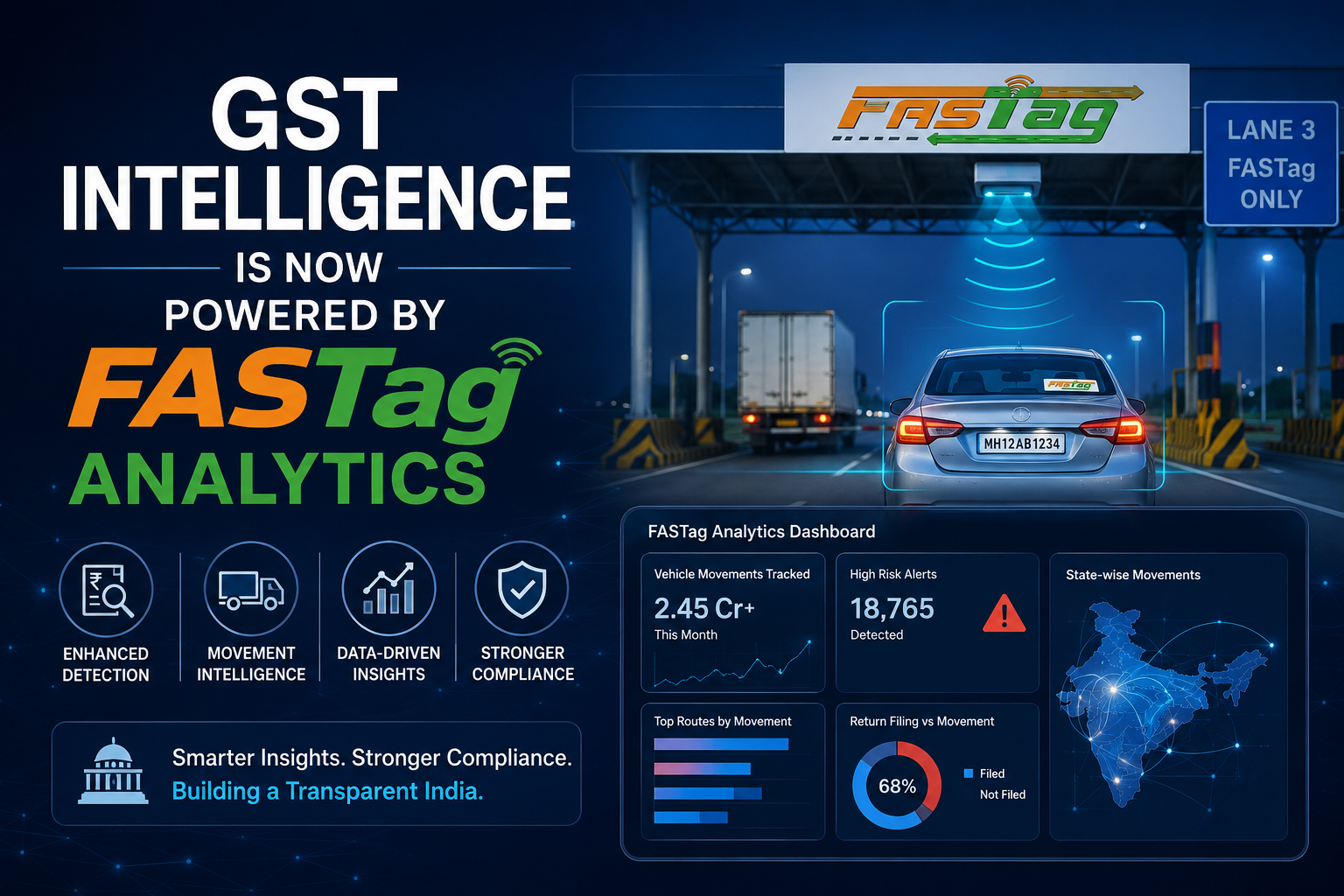
GST Intelligence is Now Powered by FASTag Analytics
Many businesses still assume that generating an E-Way Bill later for “documentation completion” is merely a procedural lapse.
However, the GST Department has significantly strengthened its data analytics and real-time verification systems.
Today, authorities are actively cross-verifying:
✅ E-Way Bill Data
✅ FASTag Movement Records
✅ Vehicle Route Mapping
✅ Toll Timings & Travel Patterns
In a recent matter, goods were genuinely transported within the local jurisdiction, but the E-Way Bill was generated nearly a week later due to pending compliance formalities.
By that time, the same vehicle had already moved on an entirely different interstate route.
Result? 🚨 GST Notice Issued.
The mismatch between the E-Way Bill timeline and the FASTag movement history led the department to treat the transaction as potentially suspicious.
📌 Critical Takeaway:
Generating E-Way Bills retrospectively merely to regularize records can create serious litigation exposure — even in genuine transactions.
From the department’s perspective, the following red flags immediately trigger scrutiny:
❌ Vehicle movement not matching declared route
❌ Inconsistency in toll movement data
❌ Delay between actual dispatch and E-Way Bill generation
❌ Timing mismatch in transportation records
✅ Recommended Compliance Practices:
• Generate E-Way Bills prior to dispatch of goods
• Maintain real-time documentation and accounting entries
• Ensure coordination between accounts, logistics, and dispatch teams
• Verify vehicle details carefully before generation
• Avoid post-facto compliance documentation practices
In today’s digital tax administration ecosystem, compliance is no longer examined only through documents — it is validated through data trails.
And data trails often speak louder than explanations.